
| |

Tips for Healthcare Professionals

COPING WITH STRESS & COMPASSION FATIGUE

As a healthcare professional, you may face stress on the job under usual conditions due to long shifts, competing responsibilities, and witnessing or hearing about difficult patient experiences. As a responder on the front lines of the coronavirus disease 2019 (COVID-19) pandemic, you are likely working longer hours, seeing loved ones less, and working in a more stressful environment. At the same time, you may be coping with the mental health effects that all types of disasters, including public health
emergencies, often have. As such, you may be noticing signs of stress and distress in yourself and your coworkers.

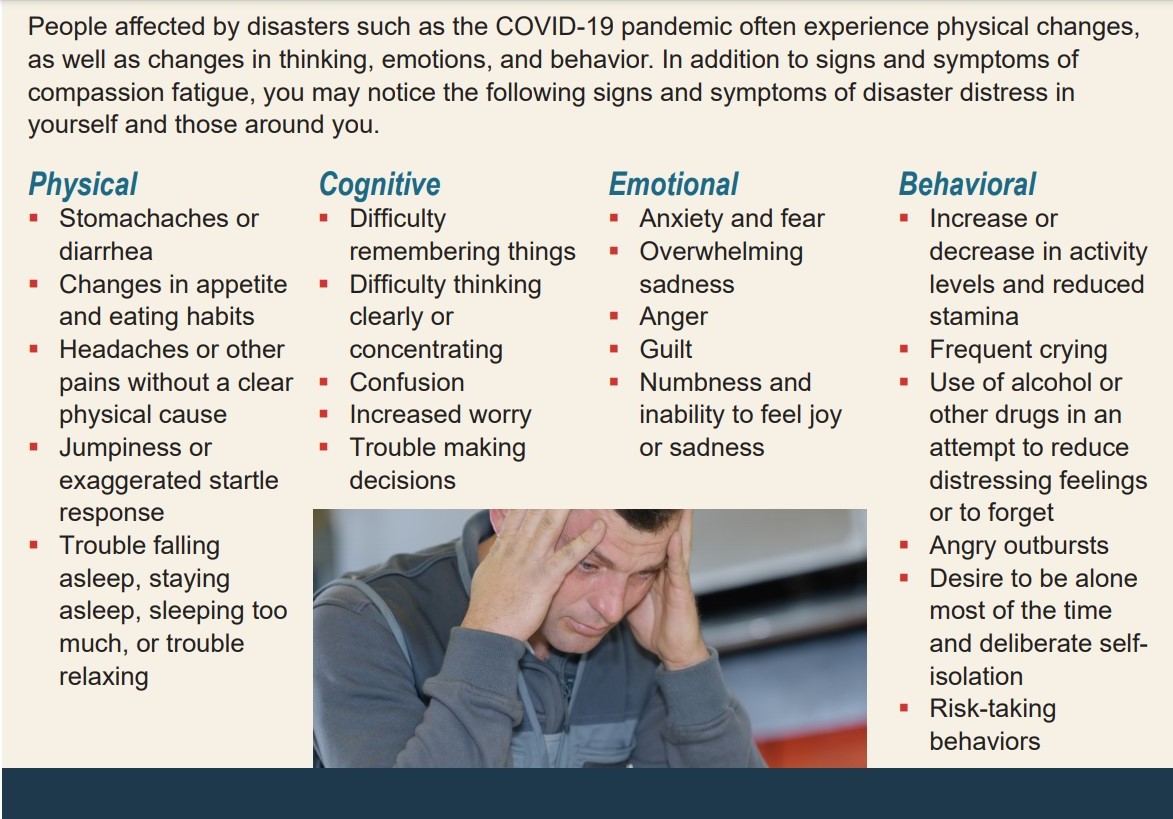
This tip sheet explores stress and compassion fatigue, as well as signs of distress after a disaster. It identifies ways to cope and enhance resilience, along with resources for more information and support.

Similar Posts

  • Autism and Aspergers

    Did you know April is National Autism Awareness Month? Autism is a complex developmental disability that typically appears during the first three years of life and affects a person’s ability to communicate and interact with others. Autism is defined by a certain set of behaviors and is a “spectrum disorder” that affects individuals to varying…

  • May 18 Webinar: Living in Today

    Video Recording A video recording of this webinar is available for you to watch. Living in Today Cherish Yesterday. Dream Tomorrow. Live Today. Join us for a free webinar sponsored by the University of Maryland Department of Psychiatry UMMC EAP Programs. Tuesday, May 18, 2021 at 3:00 pm This webinar will provide tools needed to:…

  • Anger Management Class

    Anger Management class is now forming. What do you do when you get angry? How do you feel when you get angry? Does your anger last too long? What happens after you get angry? Does your anger interfere with your job or your relationships? Could you or someone you know benefit from anger management? Call…

  • Stress Can Interfere with Sleep

    How Can I Sleep Better? Stress often interferes with sleep, which then can make the next day more difficult to manage.  If this continues, it can lead to depression, anxiety, irritability, and forgetfulness.  Many anti-depressants are effective because they help people sleep better. Some people want to try natural ways to increase sleep and then…

  • Free- Depression Screening

    In honor of National Depression Screening Day, the Employee Assistance Program (EAP) is offering a free depression screening for UMMS employees and family members. Screenings will be brief, private, and confidentially reviewed by an experienced EAP counselor on site. The screening will take 5-10 minutes.  If needed, recommendations and/or referrals can be made for you…